Autor: Sadler Fränz, edevis Gmbh

Automated wear pattern inspection

Gearboxes are key components in power transmission within mechanical engineering, automotive engineering and power generation. Deviations in tooth flank contact lead to increased wear, noise and power losses, sometimes with serious consequences for reliability and service life. This is where the thermographic contact pattern inspection developed by edevis comes in: it records load-induced temperature patterns on tooth flanks non-contact and without the use of additives, thereby ensuring that power transmission takes place precisely at the defined contact point. The thermographic contact pattern inspection can be integrated into the manufacturing process as an automated quality control measure.
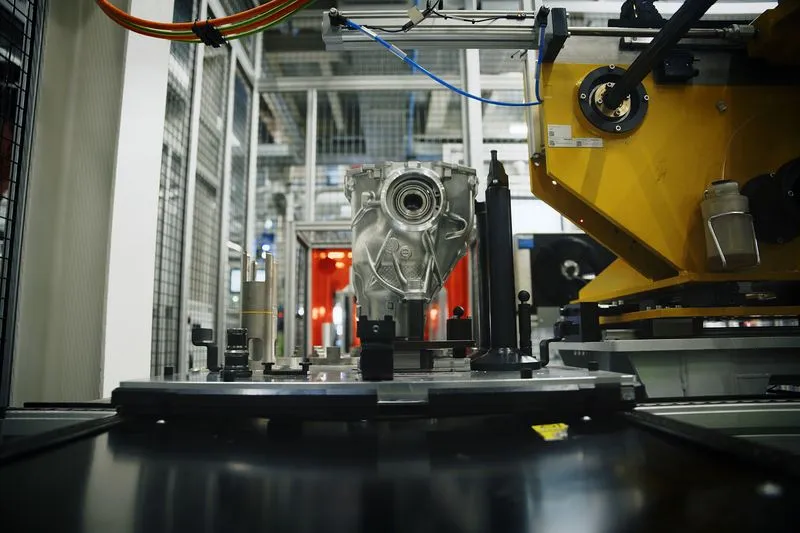
Automatisierte Tragbildprüfung von Getrieben. Getriebe fährt ein
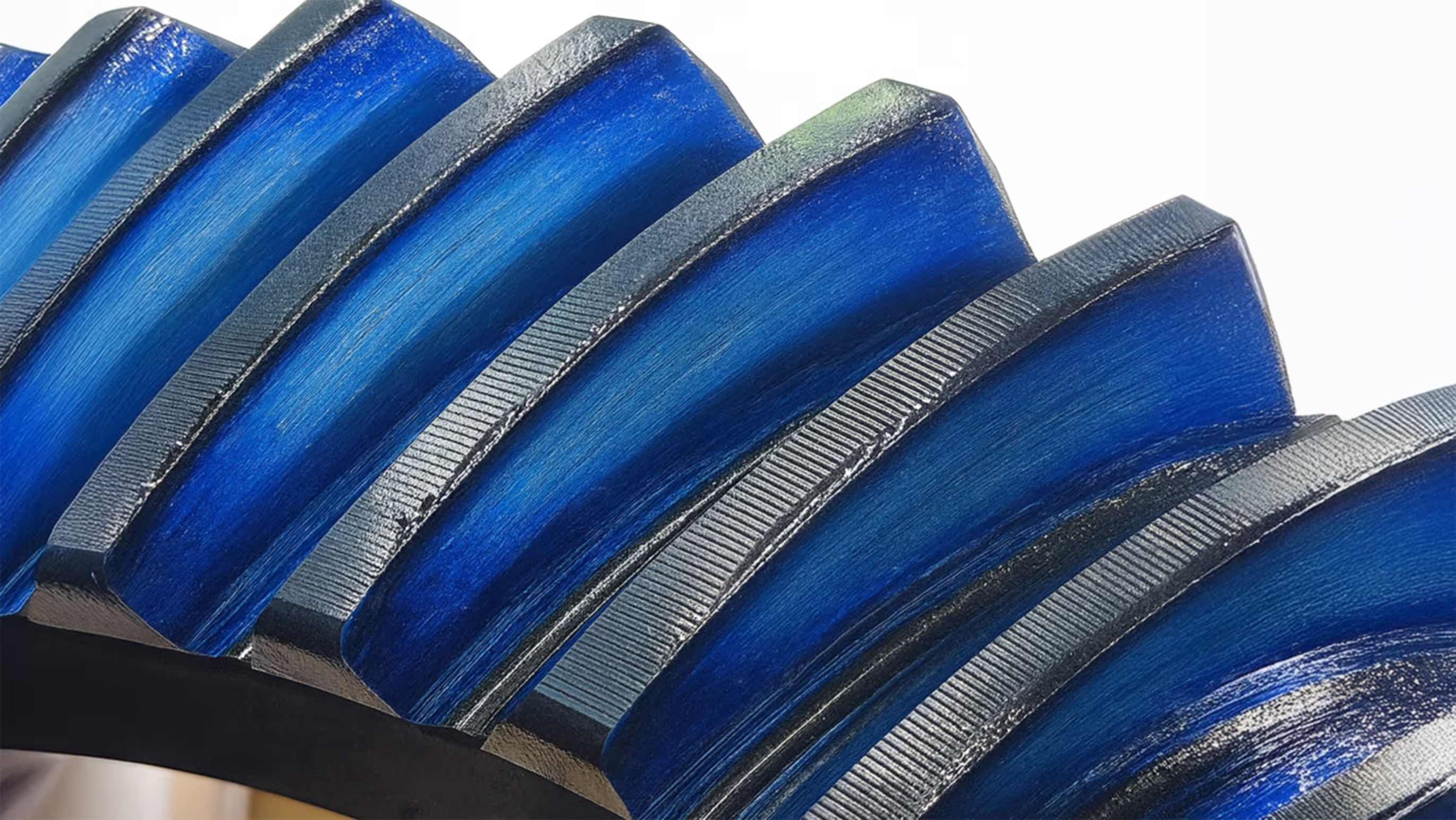
Nahaufnahme eines Zahnrads mit blau beschichteten Zähnen und feinen Einkerbungen auf der Oberfläche.
Fig. 1 Conventional contact pattern inspection using ink paste

Introducion

The quality of the gearing determines the efficiency, smoothness and service life of a gearbox. This relationship is particularly evident in electric mobility: without the masking background noise of the internal combustion engine, gearing defects become immediately apparent acoustically and are instantly noticed by both drivers and quality inspectors. Yet its relevance extends far beyond the powertrain of passenger cars. Whether in commercial vehicle gearboxes under continuous load, wind turbines with their extreme operating cycles, or industrial gearboxes in process manufacturing, wherever torque needs to be transmitted reliably, precise wear pattern inspection is essential. Conventional testing methods reach their limits here. Manual dye application yields subjective results, is time-consuming and difficult to integrate into automated production lines. Thermographic contact surface inspection bridges this gap: it measures temperature patterns on the contact surfaces non-contact, reproducibly and in real time, thereby making the contact surface accessible for fully automated 100% inspection without the need for chemical additives or subsequent cleaning.
PlayButton

Background

To date, particularly in the case of hypoid gearboxes, tooth contact testing has been carried out by applying dye and then assessing the results manually. To do this, a thin layer of dye (dye paste or varnish) is applied to the tooth flanks to be tested. When the gears are subsequently brought into mesh, the paint is removed at the points of contact through pressure or abrasion. The resulting image, for example the displacement of an oil-resistant paste on the gearing, shows where the flanks are actually in contact. A specialist then visually assesses whether the position and size of the impressions correspond to the target condition.In the event of deviations, adjustments are made, for example by retroactively shifting the gears relative to one another (e.g. using shims) or by proactively adjusting the manufacturing parameters. Furthermore, all paint residues must be removed without leaving any traces prior to commissioning. However, the traditional contact pattern inspection using paint application has several disadvantages:
- Each inspection process requires the application of dye, the joining of the parts and subsequent cleaning, entailing increased time and labour costs
-The assessment is visual, often based on a cursory inspection. The result depends on the inspector’s experience and interpretation.
-The mark shows only the aggregate contact pattern; often, due to time constraints, the contact point is inspected on only a partial segment of the gear. Local deviations at individual contact points may be overlooked.
-Manual ink application is difficult to integrate inline into automated production; 100% inspections are practically impossible to implement.
-Uneven or incomplete ink application can distort the image. These limitations create a need for a more objective, efficient method, which is where thermographic contact pattern inspection comes in.
No items found.
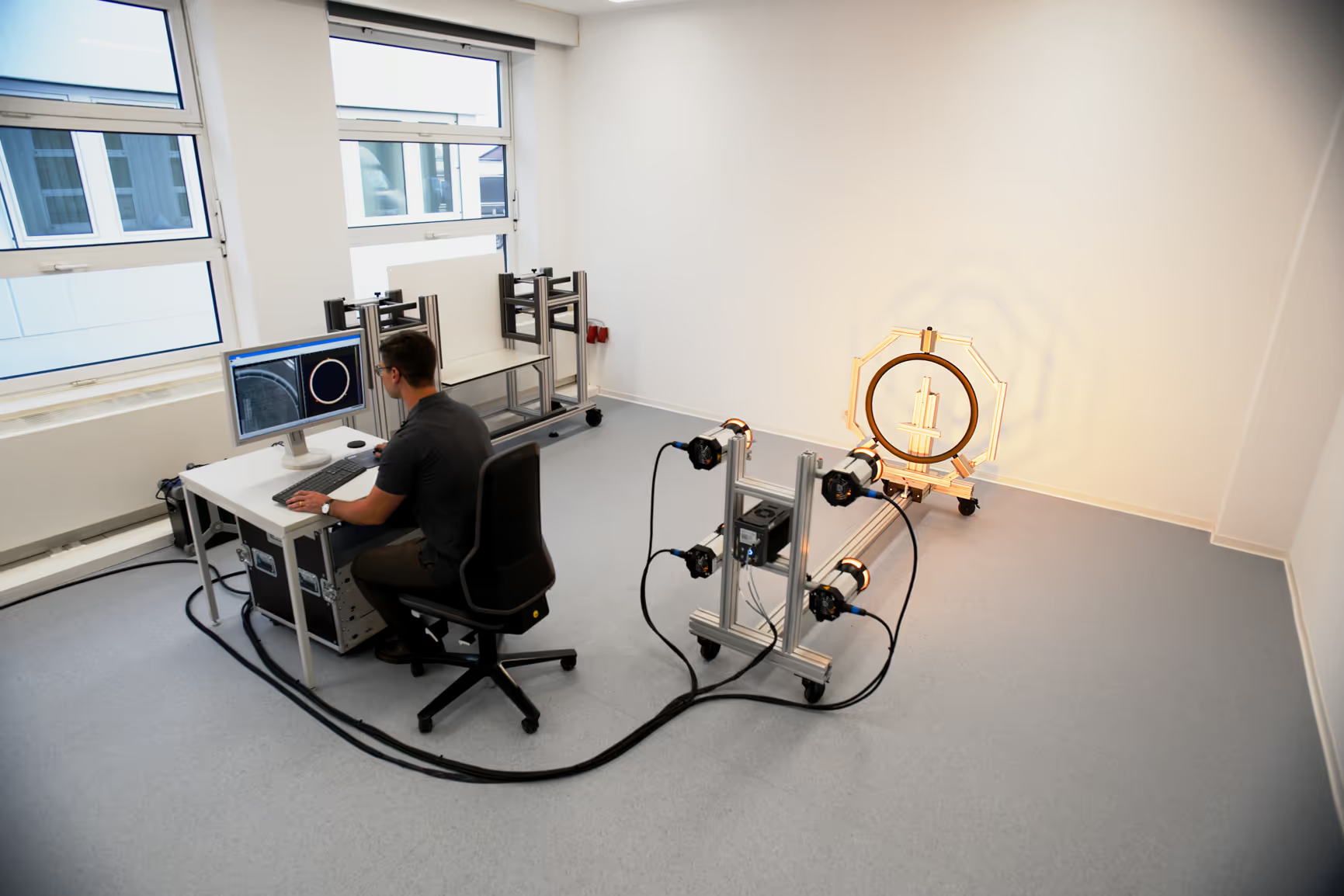
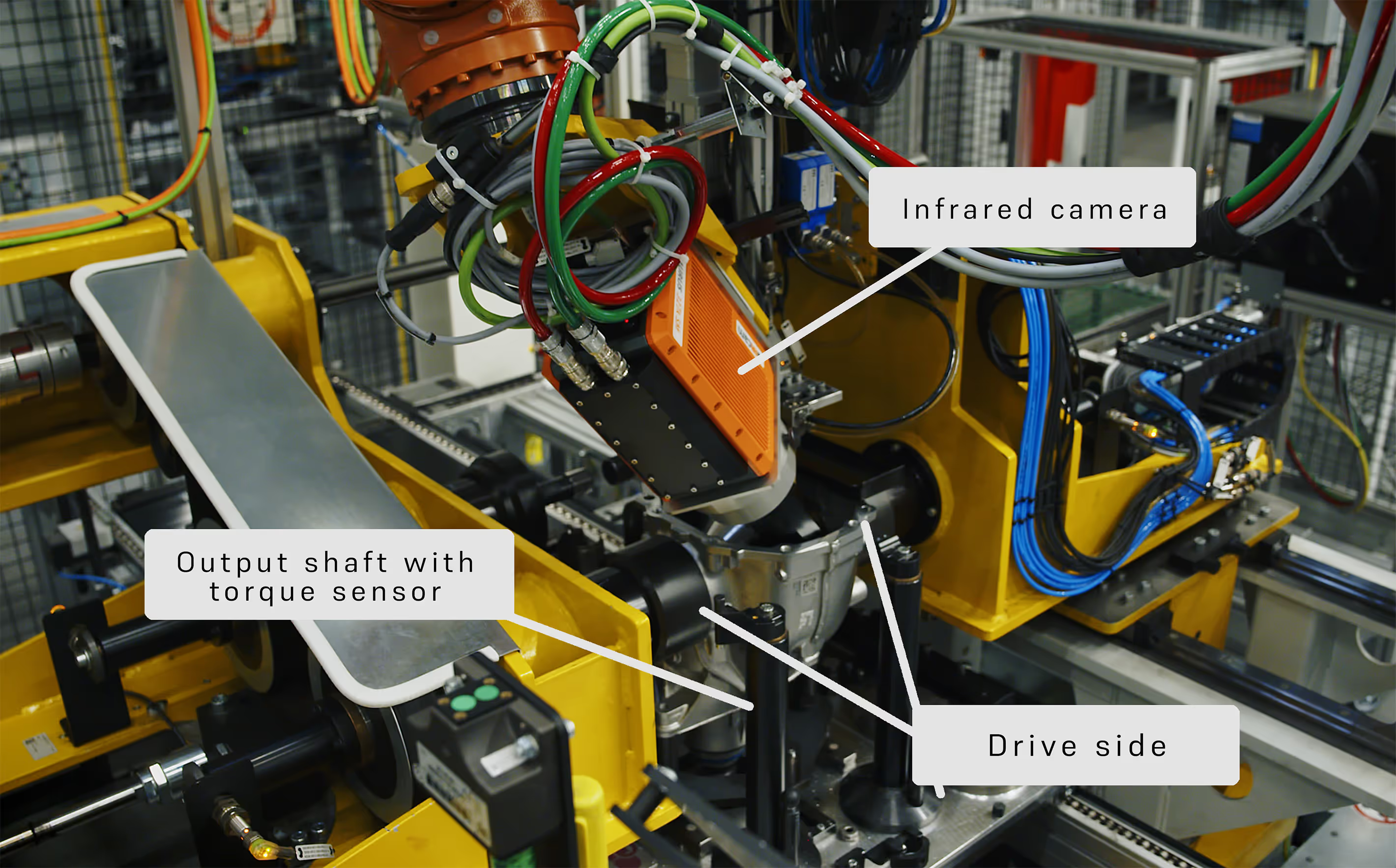
Fig. 2: Layout of the measuring cell with camera and drive unit

Thermographic pattern inspection

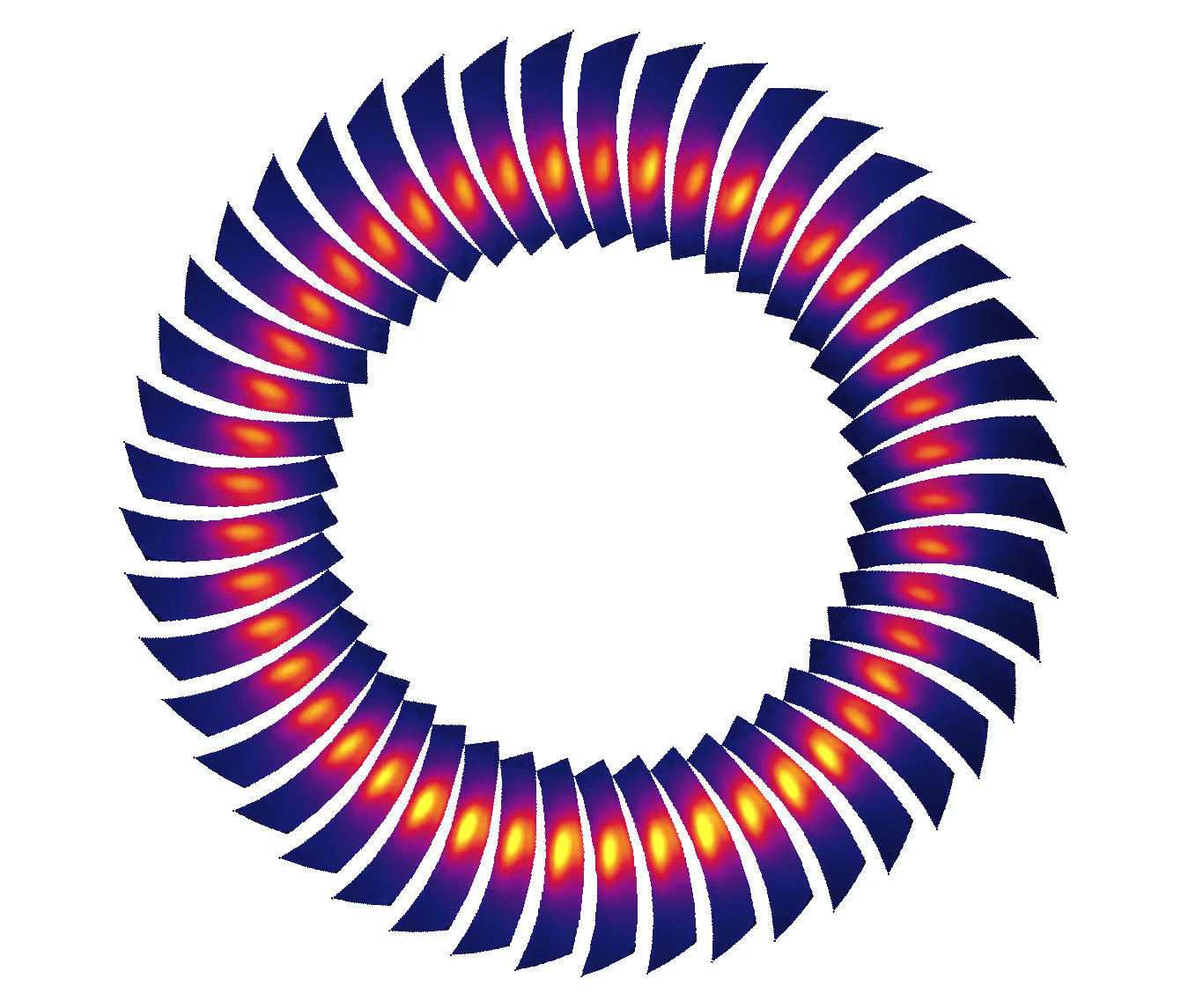
In thermographic contact pattern analysis, the contact pattern of a gear pair is visualised using the resulting thermal images. Under a defined mechanical load, the friction between the tooth flanks (rolling-sliding) generates a characteristic thermal pattern. This pattern is captured by an infrared camera for both the leading and trailing flanks, accurately mapped to the tooth geometry, and the position and shape of the contact pattern are then analysed.

System architecture and measurement setup

The test system consists of an automated load test bench with a drive unit, a thermal imaging camera and associated sensor technology (see Fig. 2: Layout of the measuring cell with camera and drive unit). The gearbox under test is fitted with torque transducers between the input and output sides and operated at a defined torque. The infrared camera is aligned so that it captures the meshing tooth flanks of a gear. The synchronised control and evaluation software coordinates all components. This ensures that the camera records defined sequences whilst the drive motors are controlled accordingly. At the same time, the software processes the captured thermal images; the measurement data is analysed in real time and thus provides a relevant control variable for upstream manufacturing and assembly processes.
No items found.
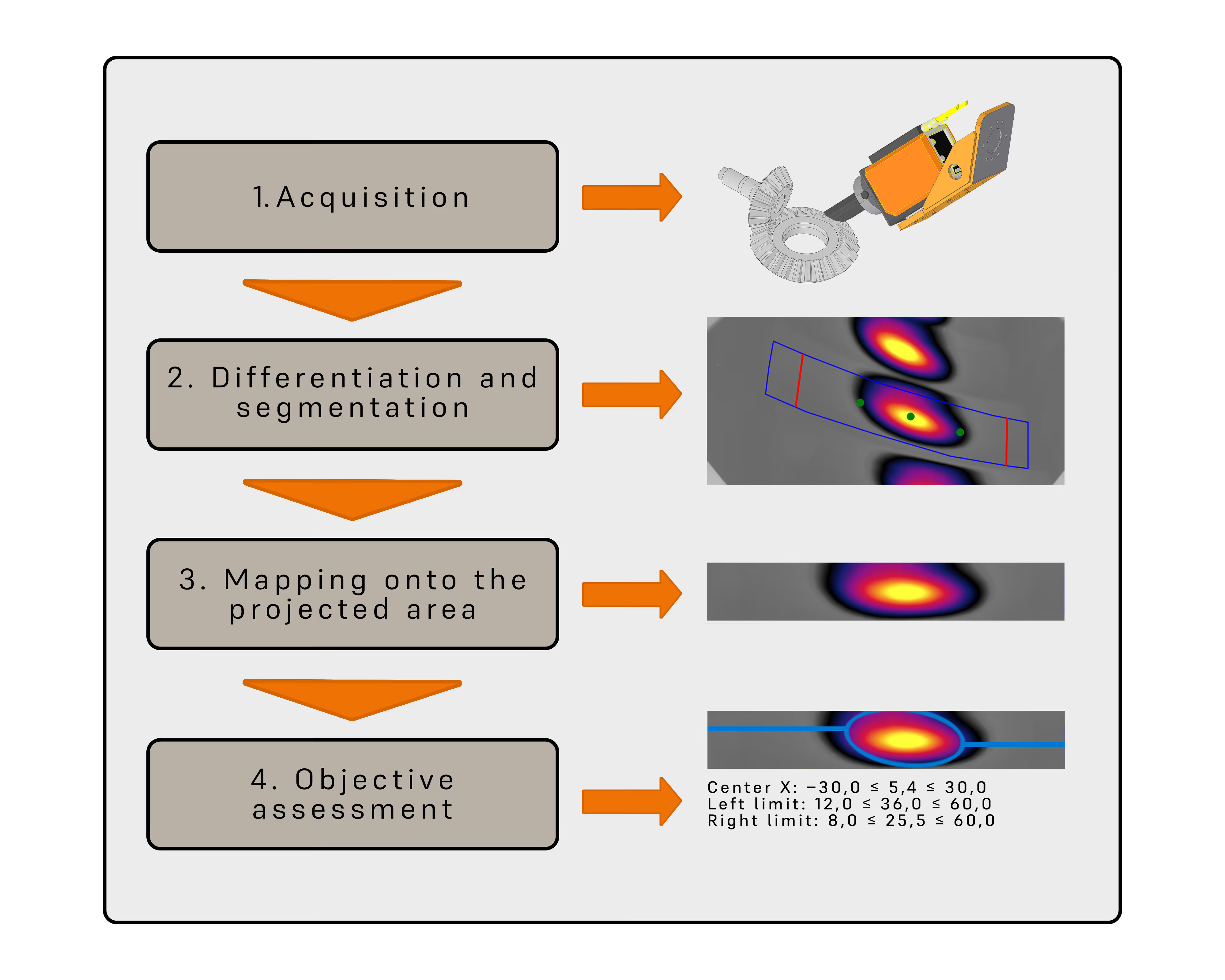
Fig. 3 Precedure for thermographic wear pattern analysis

Objective assessment and identification of the load distribution

Der Auswerteprozess der thermografischen Tragbildprüfung lässt sich in vier Schritte gliedern, die in Abbildung 3 dargestellt sind. Ziel ist es, aus den aufgenommenen Thermogrammen ein objektives und quantitativ messbares Abbild des tatsächlichen Tragbilds zu gewinnen.
01

Data Acquisition

First, raw image data of the tooth flanks in the IR spectrum is acquired under various load conditions. These datasets form the basis for the subsequent difference calculation.

Watch video
02

Difference Calculation and Segmentation

In the next step, the measurements are compared. A difference calculation is used to eliminate background components, thereby revealing the temperature increases caused by contact. The difference images reveal the areas where the tooth flanks were actually in contact. This is followed by the segmentation of relevant areas: an algorithm identifies the contact areas within the region of interest (ROI) on the tooth flank and separates them from non-contact areas.

03

Rectification to the projected surface

As the tooth flank appears distorted due to its curvature and the camera perspective, the segmented contact image is mathematically rectified. This geometric projection transfers the detected contact image onto a flat surface that corresponds to the actual tooth flank geometry. This allows the contact image to be analysed metrologically and compared with CAD data or target contours.

04

Objective evaluation and feature extraction

In the final step, the relevant parameters are automatically calculated from the rectified surface. These include, in particular, the position of the centre of gravity of the contact point relative to the tooth flank. Based on defined target values and tolerance limits, the algorithm determines whether the gear meets the requirements.

Advantages of thermographic contact pattern inspection

Temperature data can be quantitatively analysed, which ensures repeatability and comparability. Furthermore, thermography achieves a very high level of sensitivity and resolution: even subtle contact deviations become visible as temperature differences, with sub-millimetre precision depending on the size of the tooth. Furthermore, thermography allows for the individual assessment of each tooth pair, which are evaluated separately rather than simply obtaining an overall impression. This enables conclusions to be drawn regarding potential noise generation.Thermographic contact surface inspections are significantly faster than manual contact surface inspections, both in terms of preparation and post-processing as well as measurement time. This enables 100% inspections in series production. Automation reduces the manpower required to carry out the inspections, and eliminates costs for labour and consumables (dye, cleaner).

Automation and Documentation

With thermography, every inspection result is automatically available in digital form and can be fully documented. This ensures traceability and provides a benchmark for upstream manufacturing steps, whilst also enabling trends or patterns to be identified. The automatic analysis of thermograms guarantees rigorous assessment based on fixed criteria. The analysis algorithm determines whether a contact pattern falls within the tolerance limits. Overall, this transforms the contact pattern inspection from a manual inspection process into a digitally integrated process step that can also be used to optimise the manufacturing process.
Industrieller Bedienbildschirm mit Wärmebildanalyse und Steuerungstasten in einem geschützten Metallgehäuse.
Fig. 4 Live display of the thermographic results

Integration into existing processes

Thermographic contact pattern testing is suitable for in-line use and can be integrated into existing production lines. To test both flanks, the tensile flank and the compressive flank, the gearbox is loaded in both torque directions. This requires a drive concept capable of applying both driving and braking loads. If the tensile and compressive flanks are to be recorded separately, an additional handling system, such as a 6-axis robot, is required to reposition the camera for each flank direction. If only one flank is being examined, this handling step can be omitted. In enclosed or highly complex assemblies, design modifications or additional optical components such as mirrors or IR windows may therefore be necessary. As metallic surfaces reflect IR radiation and external heat sources distort the measurement image, the test area is thermally shielded. Targeted encapsulation of the measurement zone decouples the infrared measurement from external interference and ensures reproducible measurement conditions.Certain economic factors should also be taken into account. Due to the high inspection speed, integration is particularly worthwhile for medium to high production volumes or complex assemblies. For very small production runs or simple components, the conventional method may suffice. Typically, the thermography station replaces a manual test bench and can be installed in its place or, to save space, in locations where a conventional test bench would not fit. With early planning regarding installation space, cycle time and interfaces, the system runs stably and reliably once set up.
Industrieroboter in einem geschützten Bereich einer automatisierten Fertigungsanlage mit mehreren Maschinen und Kontrollbildschirmen.
Fig. 5 External view of the test rig

Conclusion

Thermographic contact pattern inspection fills a gap that traditional ink-based methods are structurally unable to address: it delivers objective, reproducible results, with precise edge definition, leaving no residue, and suitable for the cycle times of mass production. Where manual testing methods fail due to subjectivity, the need for cleaning and a lack of automation, edevis’s thermography system enables 100% testing under real-world load conditions.The technology is currently in productive use in the automotive sector. As demands on gear quality in commercial vehicles, industrial gearboxes and power generation systems grow, so too does the potential for application, wherever torque needs to be transmitted reliably and failures are costly.

Any questions about contact pattern inspection?

We are happy to support you in finding the right solution for your contact pattern inspection requirements. Whether for research, series testing or individual special applications, our thermography technologies offer a wide range of possible uses. In a non-binding discussion, we will work together to determine which system best fits your application.
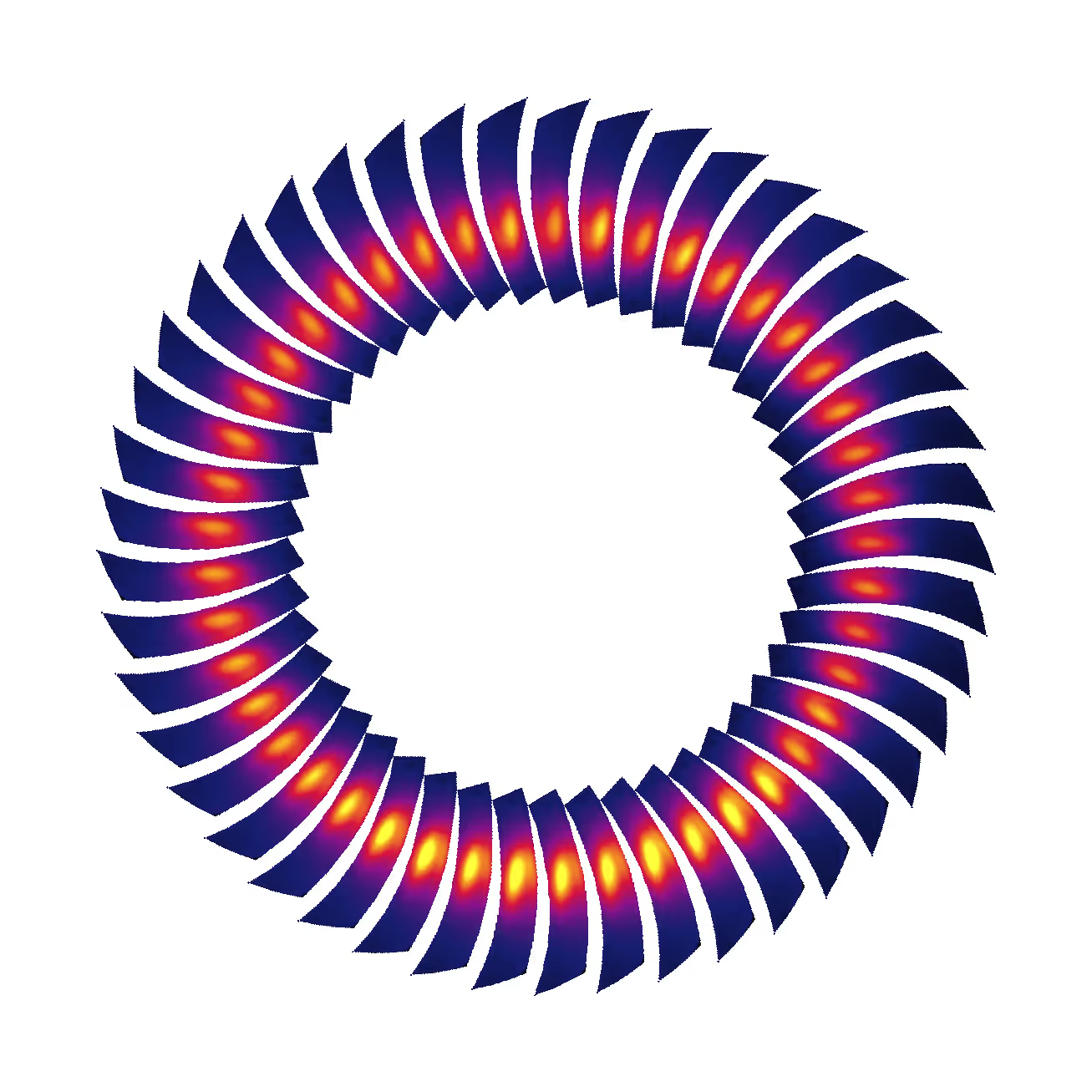
Kreisförmige Anordnung von bogenförmigen Segmenten mit Farbverlauf von Dunkelblau zu Gelb und Orange im Zentrum.

FAQ

Our frequently asked questions — answered quickly and easily.

All questions/answers

Can the system be integrated into existing production lines?

From what production volume is the investment worthwhile?

How long does a measurement take?

What distinguishes thermographic inspection from the traditional contact pattern method?

Which gear types and materials can be inspected?

Anfragen-hidden