Weld and solder seam testing

Contactless, precise and fully automated.

With our active thermography, you can reliably identify defects in welded and soldered connections — non-destructive and inline capable.
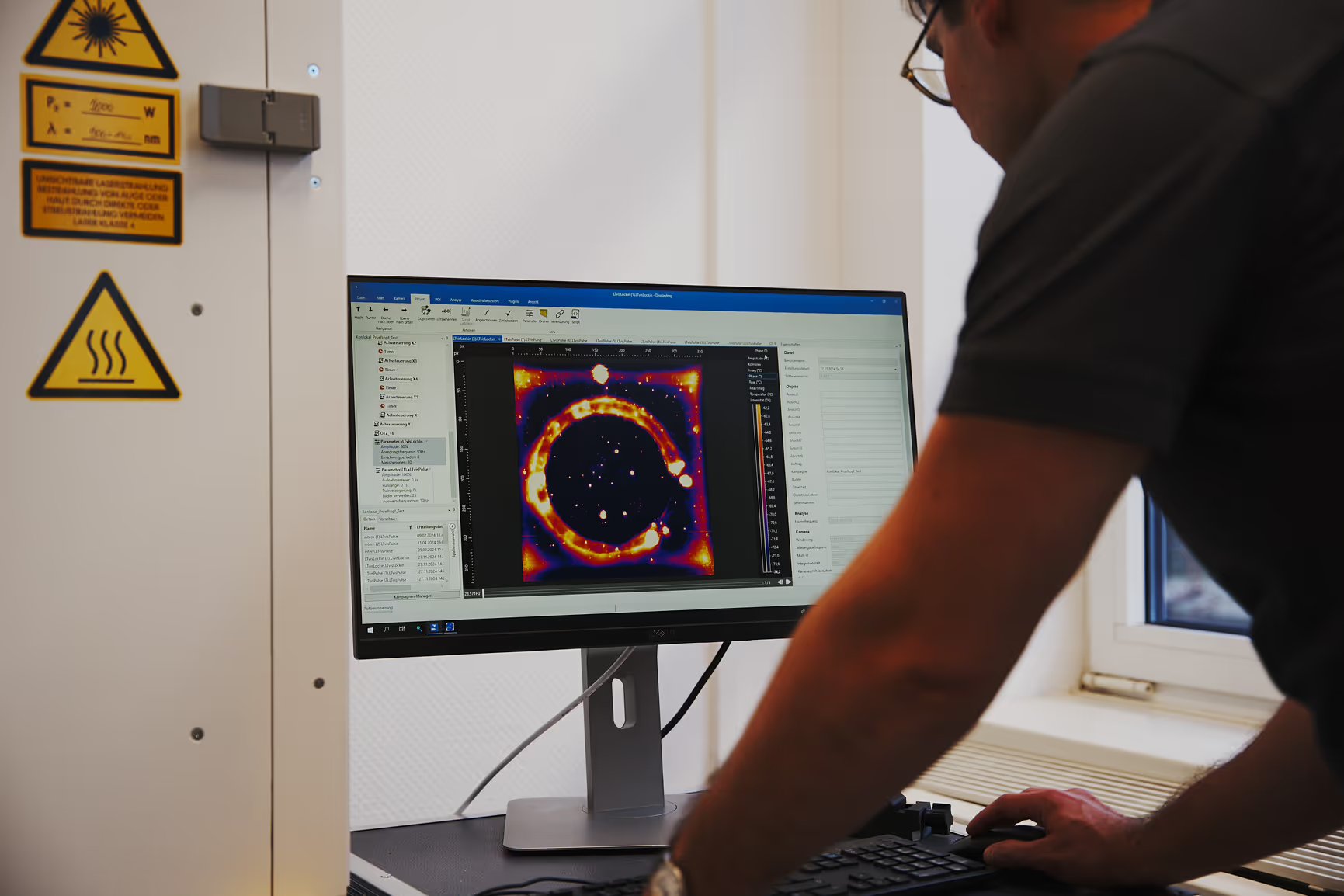
Schweißnahtprüfung im edevis Prüflabor

How it works — explained in a nutshell

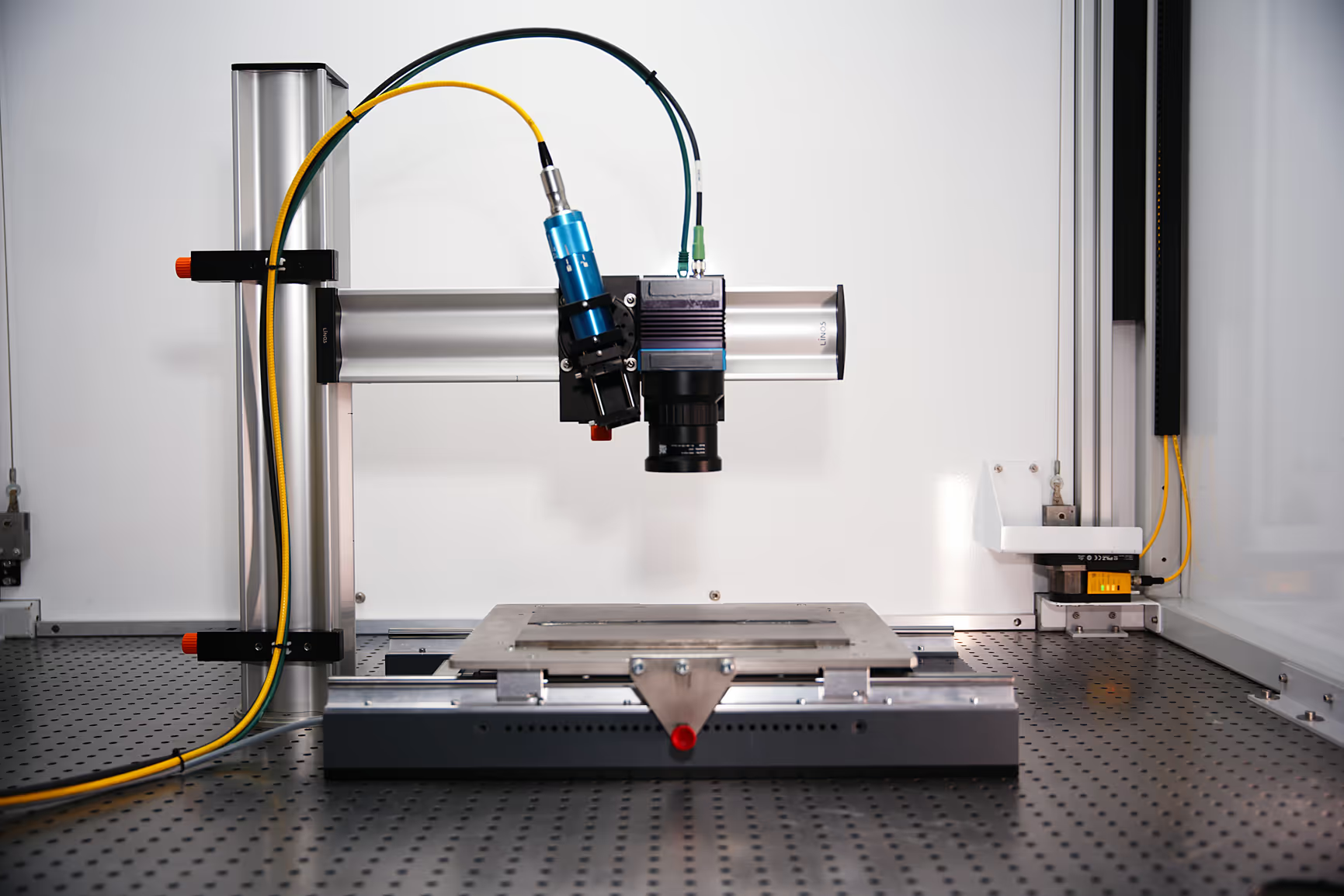
During the inspection of welded and soldered joints, the seam area is selectively thermally excited – for example, by laser or induction. Defects such as cracks, inclusions, or incomplete fusion disrupt the heat flow within the material. These thermal anomalies are detected by an infrared camera and analyzed via software – non-destructively, objectively, and in real time.

What is inspected?

Our thermography systems reliably detect:

  • Cracks & microcracks in weld seams
  • Pores, voids, inclusions
  • Lack of fusion & bonding defects
  • Defects in solder joints
  • Incomplete weld penetration
  • Seam position / alignment

Typical joint types:

  • Laser welds
  • Resistance spot welds
  • MIG/MAG welds
  • Brazed joints
  • Hybrid joints (e.g., CFRP–metal)

Application areas:

  • Body-in-white / car body construction
  • Battery housings
  • Structural frames
  • Axle components
  • Heat exchangers
  • Piping systems

Thermographic solution

Active thermography offers an efficient alternative to conventional inspection methods.
By applying targeted thermal excitation to the test area and analyzing the heat distribution, defects can be quickly and reliably identified.

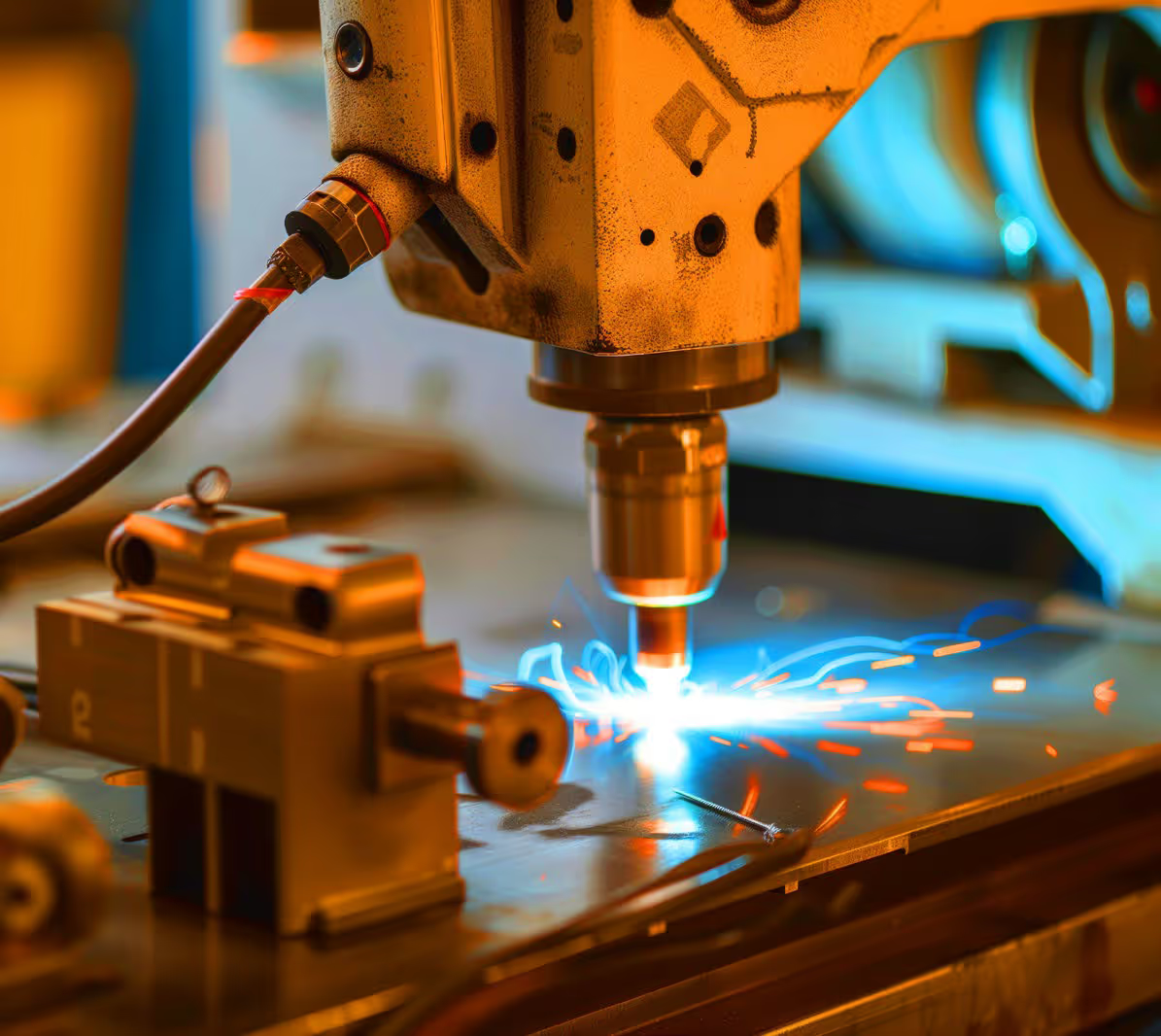
A thermal pulse – generated using laser or induction thermography – is applied to the weld or solder joint.
Defects disrupt the heat flow, leading to local temperature variations that are captured by an infrared camera and analyzed via software.

Schliffbild oder Thermografie?
Das Schliffbild ist der klassische Nachweis für Einschweißtiefe und Anbindung: Die Naht wird herausgetrennt, eingebettet, geschliffen, poliert und geätzt, dann unter dem Mikroskop vermessen. Das Ergebnis ist genau, aber es kostet das Bauteil, dauert Stunden und gilt nur für diese eine Probe. Die Laserthermografie von edevis ist die zerstörungsfreie Alternative zum Schliffbild in der Serie: Ein Laser erwärmt die Naht kurz, die Wärme fließt nur dort ab, wo die Fügepartner tatsächlich verbunden sind. Die Infrarotkamera zeigt fehlende Anbindung, Poren und Bindefehler, die Software bewertet jede Naht automatisch, im Linientakt und zu 100 %. Typisch für Zellverbinder, Busbars und Hairpins.

Kriterium
Schliffbild
Thermografie (edevis)
Bauteil
Schliffbild
wird zerstört
Thermografie (edevis)
bleibt verwendbar
Prüfumfang
Schliffbild
einzelne Proben je Schicht oder Charge
Thermografie (edevis)
jede Naht, 100 % inline
Dauer
Schliffbild
Stunden: trennen, einbetten, schleifen, ätzen
Thermografie (edevis)
Sekunden, im Linientakt
Bewertung
Schliffbild
Messung am Mikroskop, prüferabhängig
Thermografie (edevis)
automatisch, objektiv
Aussage
Schliffbild
ein Querschnitt an einer Stelle
Thermografie (edevis)
Anbindung der gesamten Naht, je Bauteil dokumentiert

Ersetzt die Thermografie das Schliffbild vollständig?

In der laufenden Serie ja: Sie prüft jede Naht zerstörungsfrei auf Anbindung, Poren und Bindefehler. Für die Prozessqualifizierung und den einmaligen Abgleich der Prüfgrenzen bleibt das Schliffbild die Referenz. Danach entfällt es als laufende Stichprobe.

Welche Schweißnahtfehler zeigt die Laserthermografie?

Fehlende oder zu kleine Anbindung, Poren und Lunker im Nahtbereich, Bindefehler zwischen den Fügepartnern sowie Abweichungen in Lage und Länge der Naht. Weil die Wärme nur über die tatsächliche Verbindung abfließt, wird die Anbindung direkt im Wärmebild sichtbar.

Schweißnahtprüfung mit Laser-Thermografie im edevis Prüflabor.
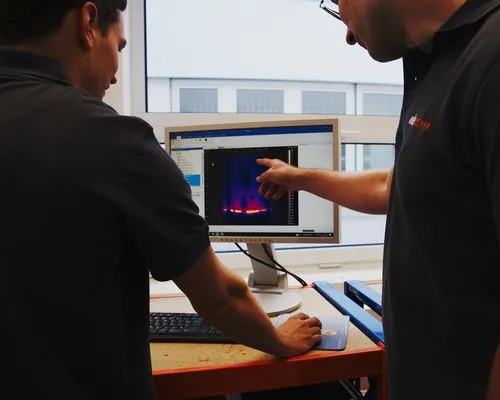
Auswertung einer Schweißnahtprüfung mit aktiver Thermografie
Whitepapers

Reliable weld seam inspection

Laser thermography ensures battery cell connections reliably and non-destructively in e-mobility.

Discover our testing laboratory

Whether feasibility studies, series tests or individual part analyses

Learn more

Any questions about weld seam inspection?

In a short initial consultation, we will explain how we can provide you with useful support with thermography — clearly, transparently and without obligation.

FAQ

Our frequently asked questions — answered quickly and easily.

All questions/answers

How does thermographic inspection work?

What advantages does thermography offer?

What are typical defects in weld seams?

Which inspection methods are used?

Why is the testing of welded and soldered joints important?