
Battery Inspection
in production using active thermography
With thermography, you ensure quality and safety throughout battery production – from the separator film to the finished cell. Our test rigs and inspection systems detect particles, seam defects, and thermal irregularities in a contactless, objective, and fully automated manner.


How it works – a quick guide
Our thermography solutions use targeted laser pulses to generate heat flows in test specimens. This thermal reaction is detected in high resolution using infrared cameras. Based on the cooling processes, relevant material or structural parameters can be precisely determined using mathematical models. Typical test objects include separator films, cell housings, cell terminals or entire module components. The systems are flexibly scalable — whether as a compact laboratory system or as an integrated inline testing system.
What Is Inspected, and Why Is It So Important?
Quality assurance of high-performance batteries requires precise inspection methods throughout the entire production chain. Our thermographic inspection systems enable contactless, automated monitoring – from the separator film to the cell housing.

Separator films (particle detection, layer thickness monitoring)
Cell terminals and cell housings (e.g., weld seam quality)
Cells and modules (thermal conductivity, temperature behavior)
Container components (leak testing)
Weld Inspection of Cell Interconnects and Busbars
During module assembly, each cell is connected via welded cell interconnects and busbars. Defects in these welds, such as pores, missing bonding areas, or insufficient bonding surfaces, increase the contact resistance. This can cause local overheating during operation, loss of performance, and potentially a safety risk for the entire module.
Traditionally, these connections are inspected using destructive cross section analysis. This method is time consuming and can only be performed on random samples. Electrical resistance measurement can identify complete failures, but it is often unable to reliably detect borderline or insufficient connections.
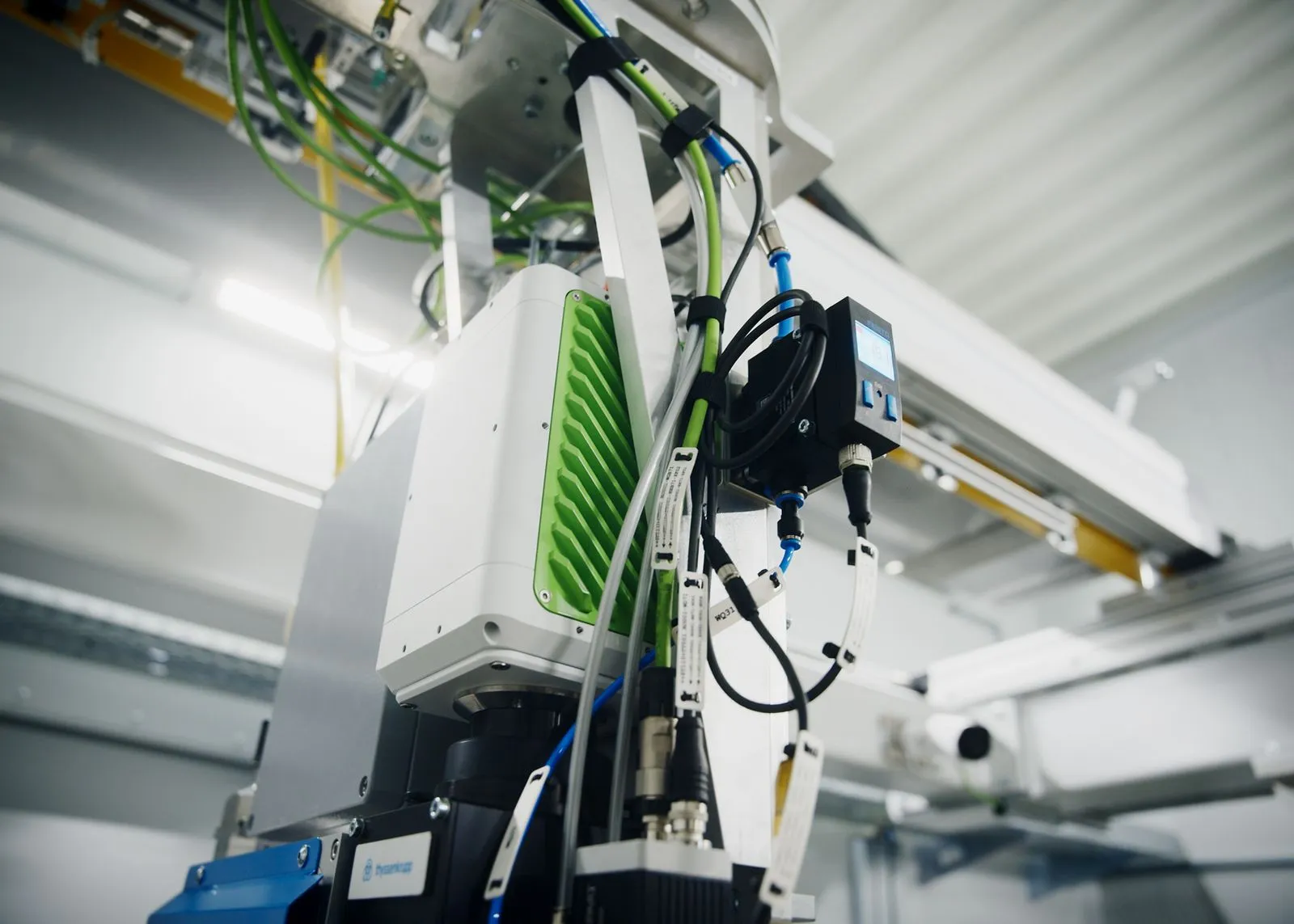
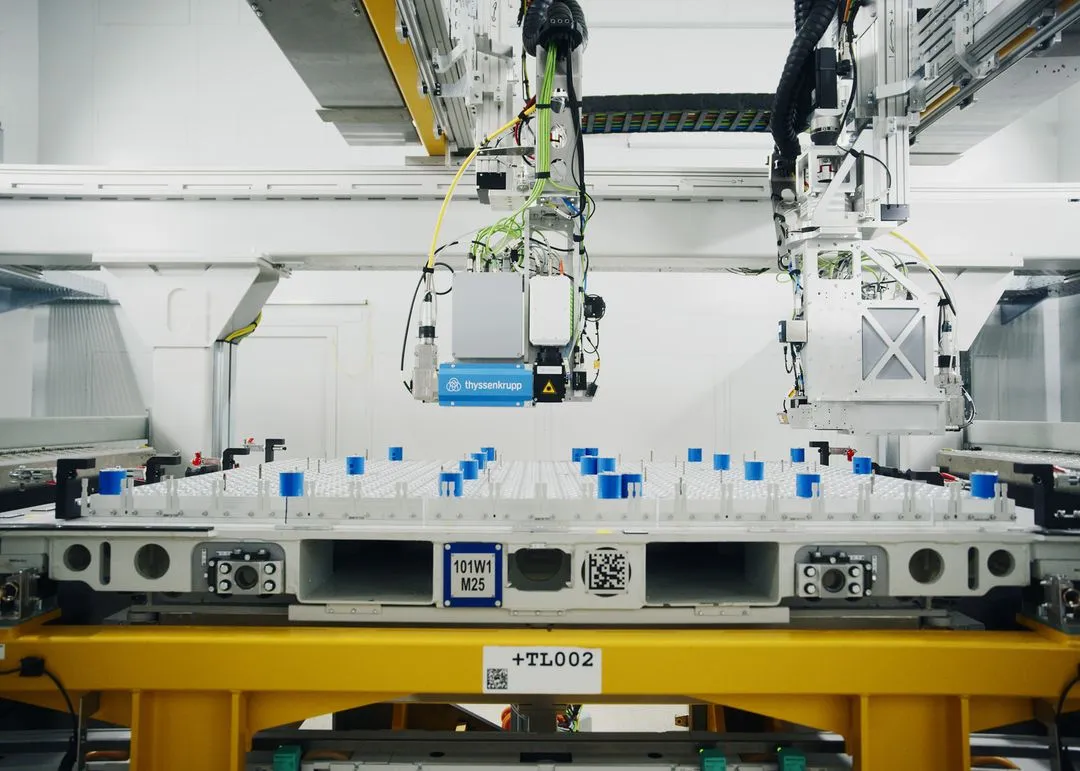
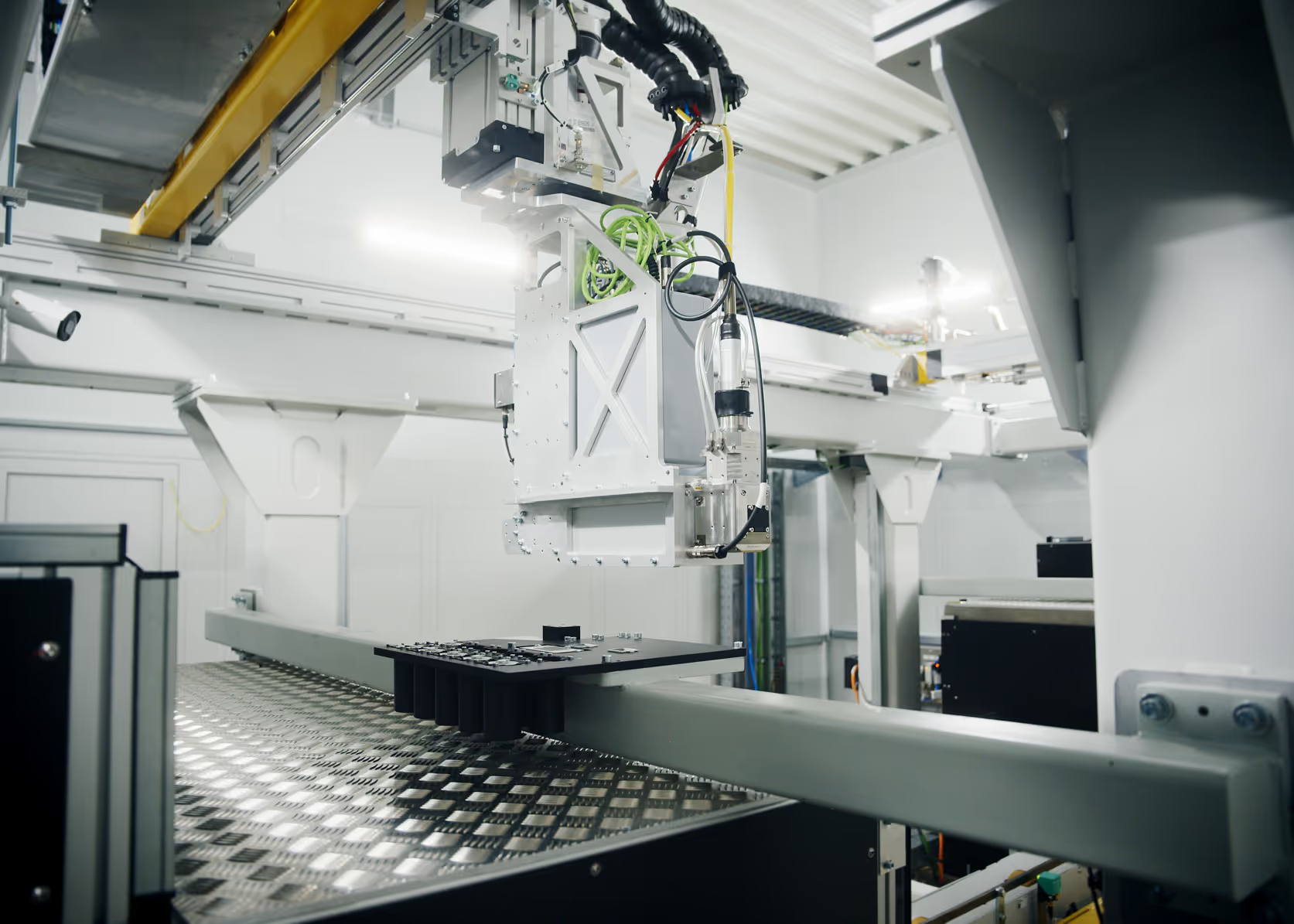
Using laser based active thermography, edevis inspects every single connection without contact. A laser pulse heats the weld, while an infrared camera records how the heat flows through the connection. This makes the actual bonding area visible and allows it to be evaluated automatically. The inspection can be performed inline at the production line cycle rate as a 100% inspection with complete documentation of every result.
Functionality
By using intelligent evaluation algorithms, the inspection process can be precisely tailored to the specific application—whether it's separator films, cell housings, or complete battery modules. The technology is suitable for both laboratory testing and inline use in serial production.

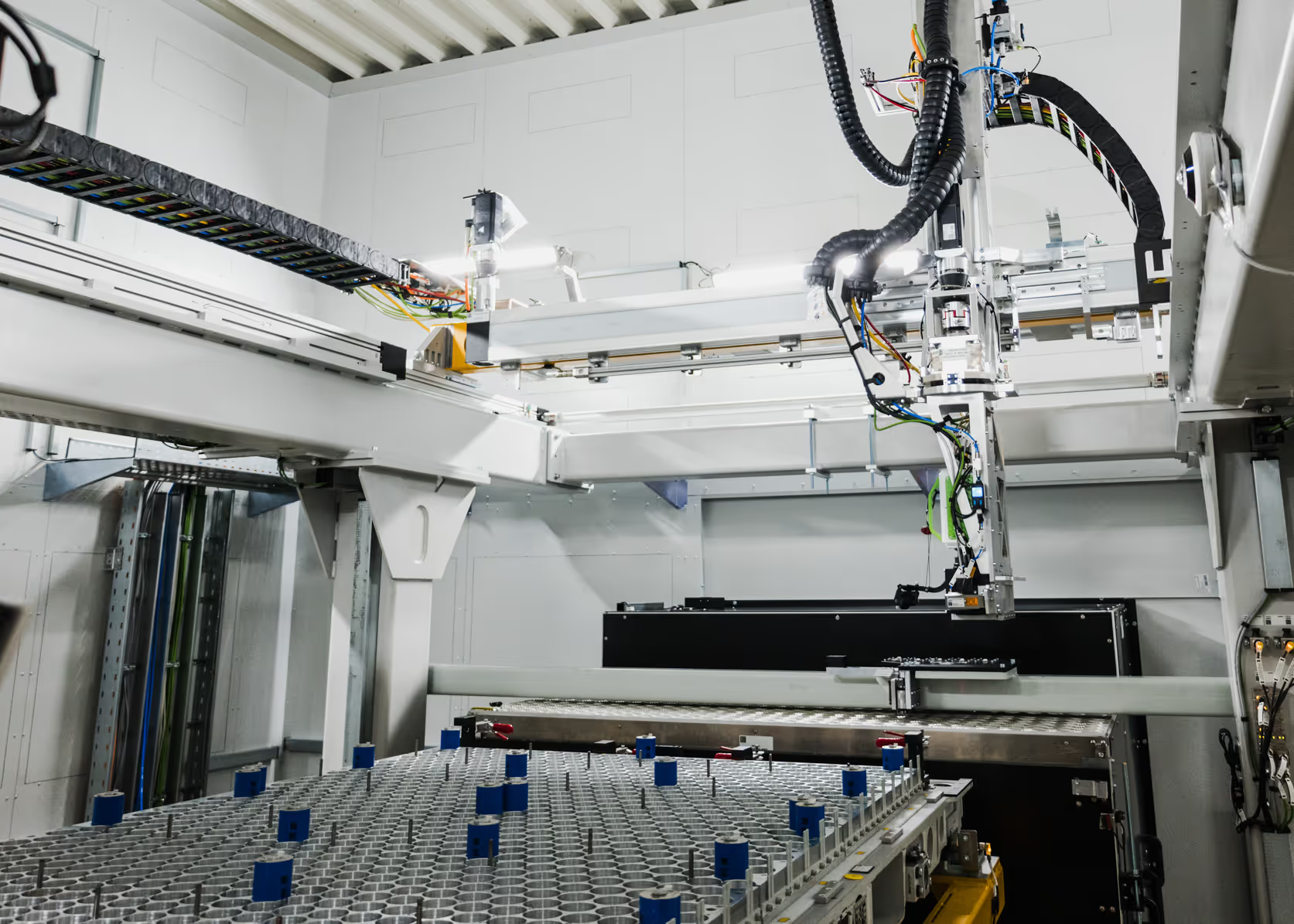
Fully Automatable
Our thermographic inspection systems can be seamlessly integrated into existing production lines.
Non-destructive testing of materials and components
100% inspection without manual pre- or post-processing
Robust even under challenging environmental conditions
Low-maintenance, process-reliable, and fully documentable
Customized system solutions & integration into existing processes
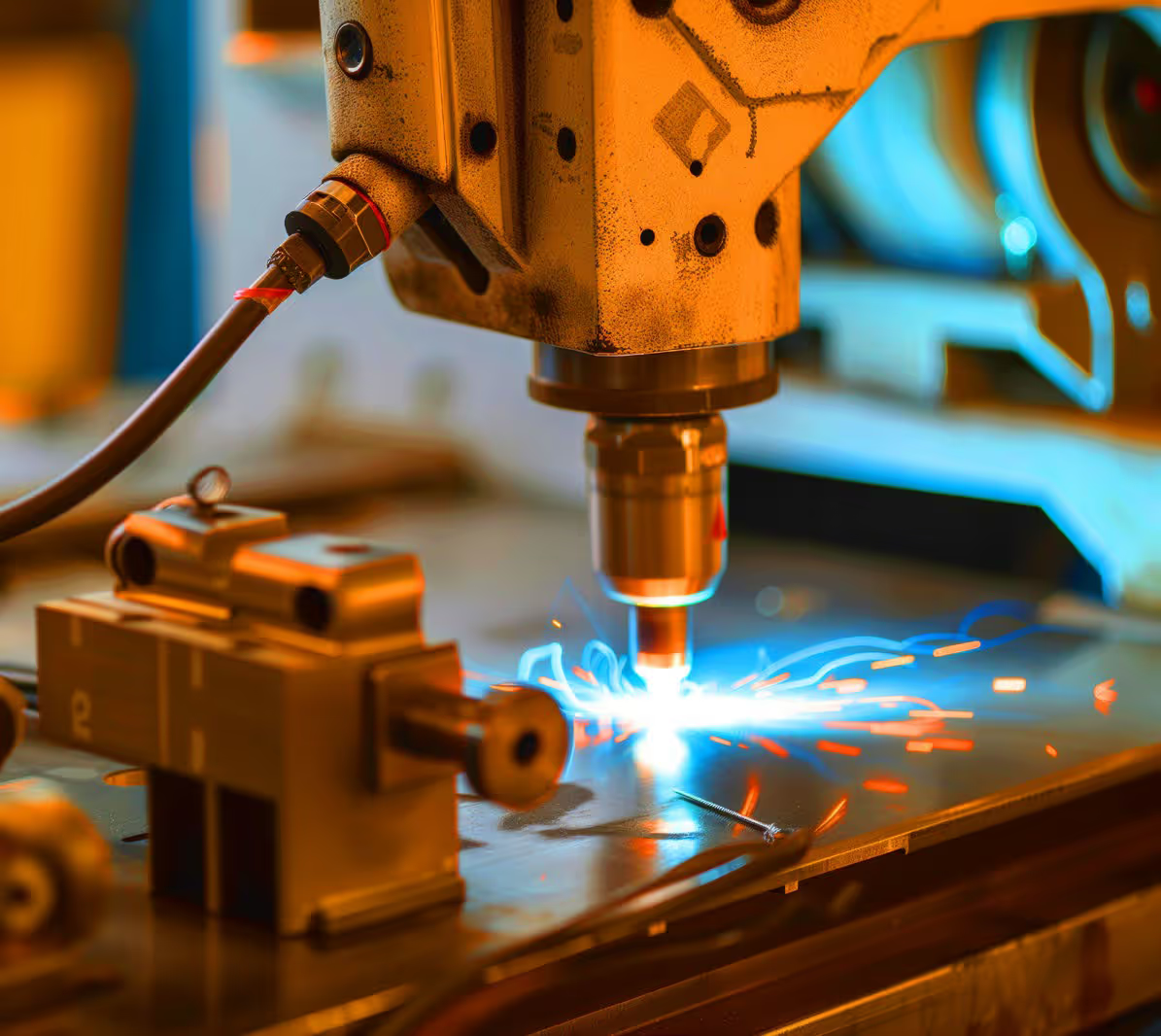
Reliable weld seam inspection
FAQ
Our frequently asked questions — answered quickly and easily.